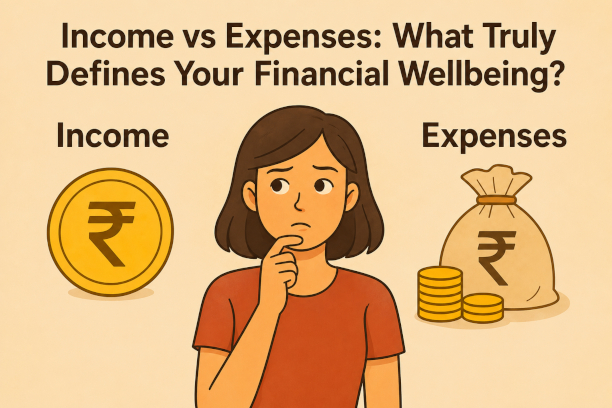
A higher salary often creates the illusion of financial freedom. Many people assume that earning more will automatically solve their money problems. But the reality is different—your financial wellbeing depends less on how much you earn and more on how much you spend.
Stories are common of high-income professionals who still feel financially stressed, while others with moderate incomes steadily build wealth. The difference often lies not in their paychecks, but in their expense management.
True financial wellbeing comes from creating a healthy gap between income and expenses. That gap becomes your savings, investments, emergency fund, retirement corpus, and long-term financial freedom.
Income Shows Potential, But Expenses Decide the Outcome
Your income reflects your earning capacity, but your expenses reveal whether you can sustain and grow your wealth.
Two individuals earning the same salary can end up with very different financial futures depending on how they control their spending.
- Example: A professional earning a high annual income but spending almost all of it may struggle to save enough for retirement. In contrast, someone earning a moderate income but spending only half of it could accumulate wealth faster over time.
Wealth is not created by income—it is created by surplus.
Surplus is the money left after expenses. This surplus can be invested, used to pay off debt, saved for emergencies, or directed toward long-term goals.
A high income gives you more opportunity, but it does not guarantee financial security. If every increase in income is matched by an increase in spending, wealth creation remains weak.
This is why expense control matters so much. It converts income into real progress.
The Hardest Number to Track: Monthly Expenses
Most people can tell you their exact salary, bonus, investment balance, or loan amount. But ask them about their monthly expenses, and the numbers are often vague or underestimated.
Why? Because expenses are tied to emotions, lifestyle choices, convenience, habits, and social pressure.
Many expenses also feel small in isolation:
- Subscriptions
- Food delivery
- Shopping
- Weekend outings
- Cab rides
- Impulse purchases
- Upgraded gadgets
- Convenience services
- Unplanned travel
- Lifestyle memberships
Individually, these may not seem harmful. But together, they can quietly consume a large part of income.
Many people do not realize how much they truly spend until they track expenses carefully for a few months.
👉 Practical takeaway: Track your expenses for 3–6 months. This clarity often surprises people and is the first step toward better financial health.
Expense tracking does not mean you must stop enjoying life. It simply helps you understand whether your spending supports your goals or works against them.
Once you know your numbers, you can make better decisions.
Lifestyle Inflation: The Silent Wealth Killer
As income grows, expenses often rise in equal or greater proportion—a phenomenon known as lifestyle inflation or lifestyle creep.
Lifestyle inflation happens when every raise, bonus, promotion, or business success leads to a higher standard of spending.
- Upgraded cars, bigger homes, frequent vacations, premium memberships, luxury shopping, and expensive dining may feel rewarding.
- But unchecked spending can lead to financial stress, even with a high salary.
- The problem is not enjoying life. The problem is allowing expenses to grow faster than savings.
Lifestyle inflation is dangerous because it often feels normal.
You may tell yourself:
- “I deserve this because I work hard.”
- “My income has increased, so I can afford it.”
- “Everyone around me is spending this way.”
- “I’ll start saving seriously later.”
- “This is just a one-time expense.”
But if these choices become habits, they reduce your ability to build wealth.
This is why the most effective savers adopt a simple rule:
Income – Savings = Expenses
instead of
Income – Expenses = Savings.
This mindset ensures that wealth grows steadily, no matter the income level.
By saving first, you make financial progress automatic. Whatever remains can then be spent more freely and guilt-free.
Why Expenses Matter More Than Income
While income provides opportunities, expenses define long-term sustainability.
A person with high income and high expenses may appear successful but remain financially fragile. A person with moderate income and disciplined expenses may quietly build strong financial security.
Expenses matter because they affect every major financial goal.
- Retirement planning depends on how much you spend, not just how much you earn.
- Emergency planning depends on how many months of expenses you need to cover.
- Financial independence depends on how much annual spending your investments must support.
- Debt management depends on how much income remains after expenses.
- Investment capacity depends on monthly surplus.
- Lifestyle security depends on whether spending is sustainable.
Someone earning a large income but spending most of it is financially more vulnerable than someone earning less but living comfortably below their means.
The lower your essential expenses, the more flexible your life becomes.
You can:
- Save more
- Invest more
- Take career risks
- Start a business
- Handle emergencies
- Retire earlier
- Reduce debt faster
- Avoid financial panic
- Make choices based on values, not pressure
High income can speed up wealth creation, but only if expenses are controlled.
How Fiduciary Financial Advisors Can Help
Managing expenses and aligning them with long-term goals isn’t always easy. This is where fiduciary financial advisors can play a crucial role.
Unlike commission-driven agents or product sellers, fiduciary advisors are expected to act in the best interests of their clients. Their focus is not just on selling investments, but on helping you make better overall financial decisions.
They help individuals:
- Identify and analyze essential vs. discretionary expenses.
- Prevent lifestyle inflation from derailing savings.
- Create a financial plan that balances today’s lifestyle with tomorrow’s security.
- Build a realistic budget based on actual spending patterns.
- Set savings targets before spending decisions.
- Align investments with life goals.
- Review debt, insurance, taxes, and retirement readiness.
- Create accountability around money habits.
- Avoid emotional or impulsive financial decisions.
A fiduciary advisor can also help you understand whether your current lifestyle is sustainable.
For example, they may help answer questions such as:
- Am I saving enough for retirement?
- Is my housing cost too high?
- Am I spending too much on discretionary items?
- Can I afford a major purchase without affecting long-term goals?
- Should I pay off debt or invest more?
- How much emergency fund do I really need?
- Is my lifestyle putting pressure on my future?
If you want professional support, consider getting matched with RiaFin Doctrine-Aligned financial professionals who can help align your income, expenses, investments, and long-term goals.
Key Insights to Remember
- High income without expense control = financial stress.
- Moderate income with disciplined spending = financial freedom.
- The golden formula is Income – Savings = Expenses.
- Wealth is built from surplus, not salary alone.
- Lifestyle inflation can quietly reduce long-term security.
- Tracking expenses creates awareness and control.
- Spending should reflect your values, not social pressure.
- Fiduciary financial advisors can provide unbiased strategies to help align expenses with long-term goals.
The goal is not to live with extreme restriction. The goal is to create a sustainable balance between enjoying life today and protecting your future.
FAQs
Q1: Can someone with a moderate salary still build wealth?
Absolutely. Consistent savings, controlled expenses, and disciplined investing often matter more than the size of your paycheck. A moderate income with a strong savings rate can create more wealth than a high income with uncontrolled spending.
Q2: How can fiduciary advisors help with expense management?
They provide independent, client-focused guidance by helping you identify spending patterns, prioritize savings, avoid lifestyle inflation, and create a financial plan that balances current needs with future goals.
Q3: What’s the biggest mistake high earners make with money?
Lifestyle inflation. As income rises, expenses often rise too. This can leave very little room for wealth creation despite a strong salary.
Q4: Why is expense tracking important?
Expense tracking shows where your money is actually going. Without tracking, most people underestimate their spending and overestimate how much they can save.
Q5: How long should I track my expenses?
Track expenses for at least 3 months. A 6-month period gives a clearer picture because it includes irregular costs such as travel, gifts, insurance premiums, repairs, and annual subscriptions.
Q6: What is the best way to control lifestyle inflation?
Save or invest a fixed portion of every income increase before upgrading your lifestyle. This allows you to enjoy some income growth while still improving your financial future.
Q7: What does “Income – Savings = Expenses” mean?
It means you save first and spend what remains. This approach makes wealth creation a priority instead of hoping money is left at the end of the month.
Q8: Is it wrong to spend on lifestyle upgrades?
No. Lifestyle upgrades are fine if they are planned, affordable, and do not damage savings, debt repayment, emergency funds, or long-term goals.
Q9: How do I know if I am spending too much?
You may be spending too much if you earn well but have little savings, depend on credit cards, delay investments, feel stressed before payday, or cannot handle emergencies without borrowing.
Q10: Should I focus more on increasing income or reducing expenses?
Both matter. Increasing income creates opportunity, while controlling expenses turns that opportunity into wealth. The strongest financial progress happens when income rises and spending remains intentional.
Q11: Can budgeting reduce financial stress?
Yes. Budgeting creates clarity and control. When you know your numbers, you can make better choices and reduce anxiety about where your money is going.
Q12: How often should I review my expenses?
Review expenses monthly for short-term control and annually for bigger lifestyle decisions. Major life changes such as marriage, a new job, a home purchase, or having children should also trigger a review.
Final Word
Your salary may reflect your success, but your expenses reveal your financial reality.
True financial wellbeing comes from balancing both—earning well and spending wisely.
A high income can open doors, but disciplined spending keeps those doors open. Without expense control, even strong earnings can disappear quickly. With intentional spending, even a moderate income can become the foundation for long-term wealth.
For those seeking expert support, fiduciary financial advisors can help create a plan that aligns income, expenses, and life goals—ensuring financial security today and tomorrow.
The path to financial freedom is not only about earning more. It is about keeping more, investing wisely, and spending in a way that supports the life you truly want.